
The Pope of Physics – Enrico Fermi
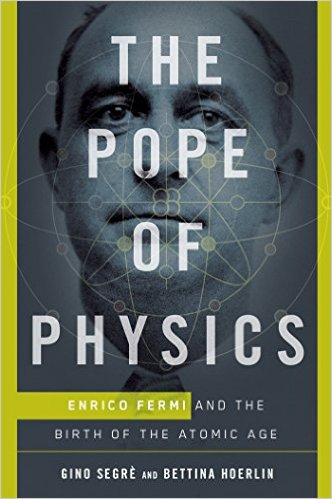 In “The Pope of Physics” Gino Segre and Bettina Hoerlin have created an imminently readable biography of one of the true greats of 20th Century physics. Segre and Hoerlin do an excellent job of weaving just enough of the physics science for an appreciation of this age of discovery in the quantum realm. For the details of the science, there are many previous texts that detail Enrico Fermi’s accomplishments in the golden age of quantum physics between WWI and WWII.
“The Pope of Physics” takes the perspective of Fermi, the man. With unique access to the Fermi family and personal insight into Italy, Gino Segre and his wife Bettina have developed a revealing narrative for the private Fermi. This approach to Enrico Fermi’s life only strengthens his already great legacy as teacher and an exponent of the complex world of quantum physics. An illustration of Fermi’s contribution is that no less than 6 of his former students became Noble laureates. A record that has no equal.
But we also learn that Fermi, even at the pinnacle of preeminence, had no interest in wielding the political influence available to him. At every turn, he avoided exercising these opportunities always wishing to return to scientific inquires. And despite his reluctance to address moral and political consequences, such was his persona that no one ever held this against him.
Though Enrico Fermi is the focus of the book, we also get glimpses of the other greats of the period through the his decades of collaboration. These insights into the collaborations clearly show the power the combined intellect with Fermi in the lead.
I highly recommend this book to anyone wanting to learn more about the man behind this truly great of quantum physics.
Posted: August 3rd, 2016 under Books.
Comments: none